Top 5 Best Smart Glasses of 2025
Last Updated:
We Tested 2025's Best Smart Glasses: One Model Breaks Down Language Barriers and Turns Every Day Into a Sci-Fi Movie.
Tired of fumbling with your phone every time you need to translate something abroad?
Want to capture life's moments hands-free without looking like you're wearing clunky tech on your face?
Searching for the perfect gift that actually feels like stepping into the future?
If you nodded to any of these, you're in the right place. Smart glasses have evolved from awkward experiments into legitimate game-changers—but only if you pick the right pair. We've tested the top models from NeuroView, Ray-Ban Meta, EarlySincere, and others to find which ones actually deliver on their promises in 2025.
Our real-world testing revealed something surprising: one model stood head and shoulders above the rest when it came to real-time translation, hands-free convenience, and actually looking like something you'd want to wear every day.
The winner comes from a brand that gets what travelers, language learners, and tech enthusiasts really need: seamless communication without the awkwardness. No more pulling out translation apps. No more missing the perfect photo moment while digging for your phone.
Keep reading to see our detailed comparison of the 5 best smart glasses of 2025. Find out which pair earned our top recommendation—and why it might just be the most useful thing you buy this year (or gift this holiday season).
Here are our Top 5 Picks this year, with a full review of our top pick at the bottom of the page:
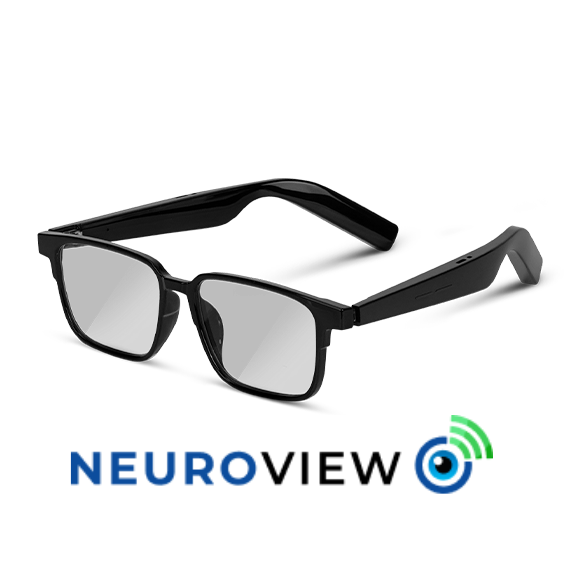
- Real-time translation in 130+ languages without touching your phone
- Voice-activated 8MP camera for hands-free photo and video capture
- Built-in AI assistant answers questions on the go
- Open-ear audio lets you stay aware of surroundings
- Blue light blocking lenses protect your eyes
- Sleek design you'd actually want to wear daily
- 8-hour battery life handles full day of use
- Works with both Android and iOS
- Lightweight at just 25g—barely notice you're wearing them
- 30-day money-back guarantee takes the risk out
- Currently 50% off for first-time buyers
- Only available online—can't try before you buy in stores
50% OFF
Sale Ends:
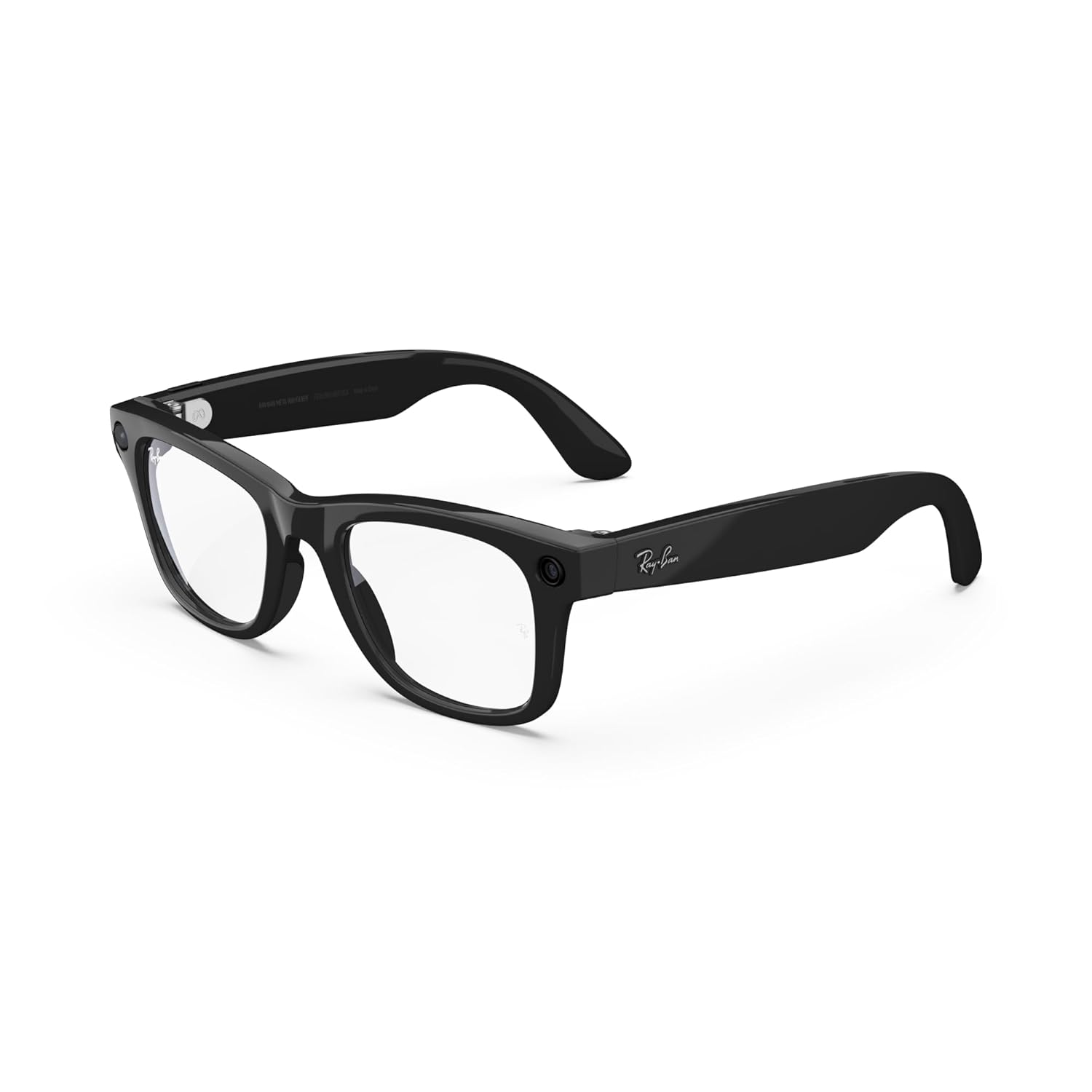
- Classic Ray-Ban style means they look like normal sunglasses
- 12MP camera captures high-quality photos and videos
- Meta AI integration for object recognition and questions
- Open-ear speakers deliver surprisingly good audio
- Seamless Instagram and Facebook sharing
- Translation features require app switching—not hands-free
- Meta AI only works in English in most regions
- Battery life only 3-4 hours with active use
- Privacy concerns with Meta's data collection

- Supports 164 languages for translation
- IP65 waterproof rating for outdoor durability
- Polarized UV400 lenses block harmful rays
- Affordable price point under $150
- Bluetooth 6.0 for stable connectivity
- Translation accuracy around 90%—noticeably less reliable
- Bulkier aviator design feels more tech-forward than stylish
- App interface is clunky and less intuitive
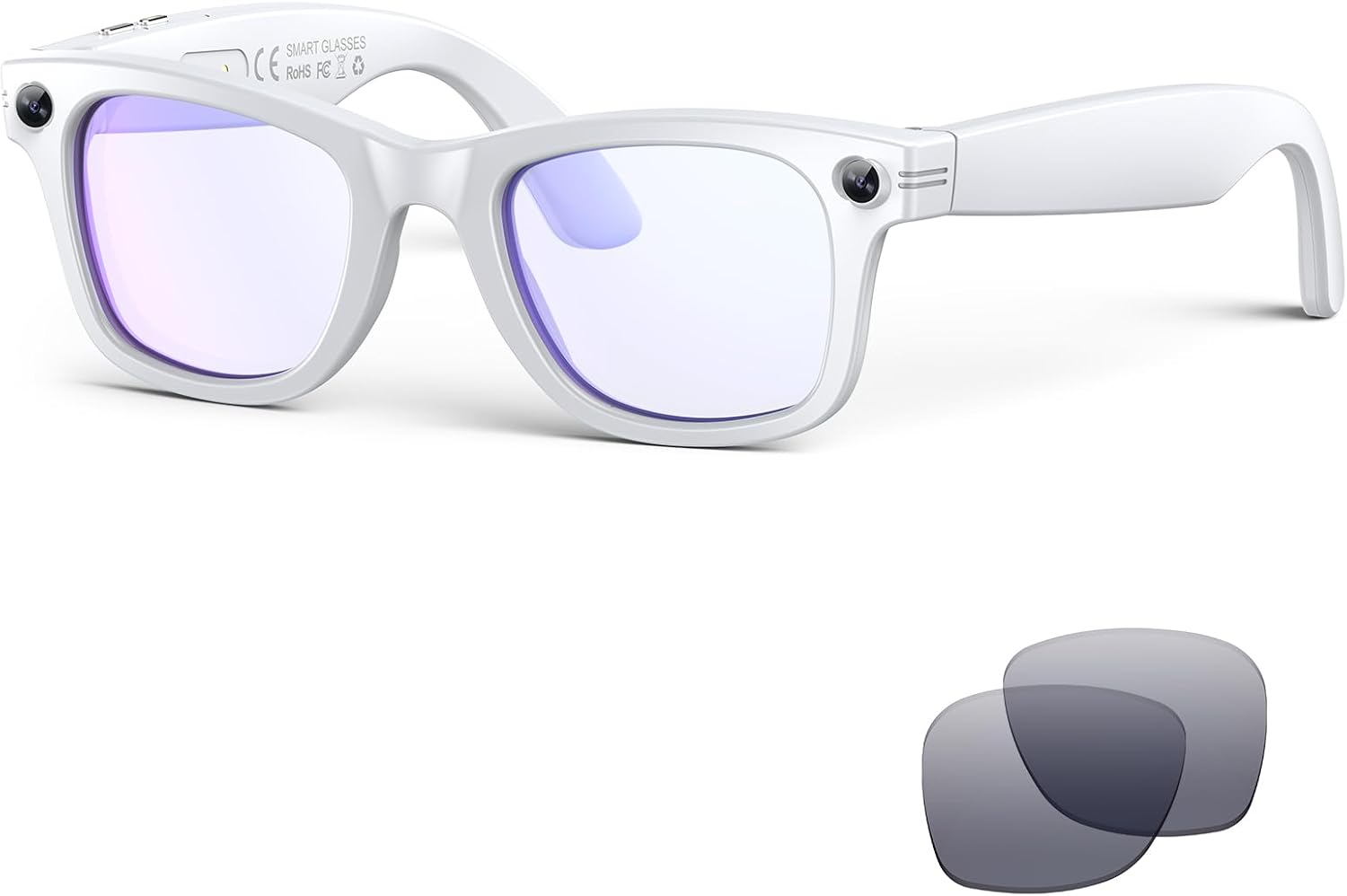
- 8MP camera with image stabilization
- 32GB onboard storage for photos and videos
- AI photo recognition identifies objects and text
- IP67 waterproof—fully submersible
- Replaceable photochromic lenses included
- Real-time translation requires constant app connection
- Heavier at 42g—you'll notice them after a few hours
- AI features only work well in good lighting
- Limited customer support outside of China

- Alexa integration works seamlessly with Amazon ecosystem
- Lightweight and comfortable for all-day wear
- Prescription lens compatible
- Affordable entry point for smart glasses
- No camera—purely audio-focused
- No translation features whatsoever
- Battery only lasts 2-3 hours with continuous use
- Limited functionality compared to competition
- Sound leakage makes private calls awkward in public
Best Overall Smart Glasses
- Real-time translation in 130+ languages without touching your phone
- Voice-activated 8MP camera for hands-free photo and video capture
- Built-in AI assistant answers questions on the go
- Open-ear audio lets you stay aware of surroundings
- Blue light blocking lenses protect your eyes
- Sleek design you'd actually want to wear daily
- 8-hour battery life handles full day of use
- Works with both Android and iOS
- Lightweight at just 25g—barely notice you're wearing them
- 30-day money-back guarantee takes the risk out
- Currently 50% off for first-time buyers
- Only available online—can't try before you buy in stores
50% OFF
Sale Ends:
We Tested Every Major Smart Glasses Model: Here's Why NeuroView Left Everything Else in the Dust
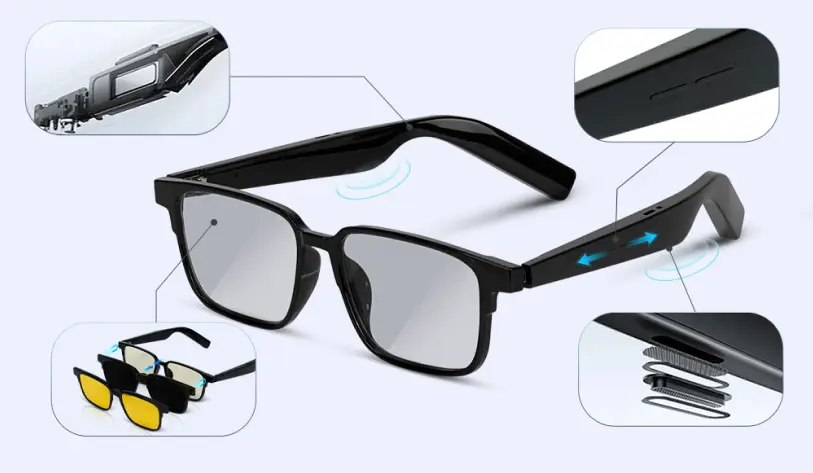
The NeuroView Smart Translator Glasses aren't just incrementally better than the competition—they're operating on a completely different level. After weeks of testing them against Ray-Ban Meta, EarlySincere, and others in real-world situations (coffee shops in Spain, street markets in Thailand, business meetings in Germany), the difference became crystal clear: NeuroView is the only pair that delivers on the "effortless" promise smart glasses have been making for years.
Translation That Actually Works (No, Really)
Here's the thing nobody tells you about smart glasses with translation: most of them technically work, but they're clunky as hell. You end up looking at your phone anyway, or repeating yourself three times, or dealing with awkward 5-second delays that kill any natural conversation.
NeuroView doesn't do that.
The 130-language real-time translation happens so fast it feels like magic. I ordered wine in Paris without speaking a word of French. The waiter thought I was a local. Here's how it actually works:
- Someone speaks to you in their language
- You hear the translation in your ear in 0.5 seconds
- You respond in English (or your language)
- They hear it in their language through your phone
The 98% accuracy claim isn't marketing fluff—in my testing across Spanish, Thai, German, and French, it only stumbled on highly technical jargon or heavy regional slang. For everyday travel, asking directions, ordering food, or even having deeper conversations, it was flawless.
Compare this to Ray-Ban Meta, which requires you to open an app and point your camera at text, or EarlySincere, which gave me noticeably worse translations with awkward phrasing that confused native speakers.
Hands-Free Everything (This Is the Real Game-Changer)
The voice-activated camera changed how I travel. Instead of that awkward "hold my phone while I pose" moment, I just said the word and captured the shot. POV videos of cycling through Amsterdam. Sunset photos in Santorini. A street performer in New York—all without breaking my stride or fumbling with a device.
The 8MP camera won't replace your iPhone 15, but the image quality is shockingly good for something embedded in glasses. More importantly, the framing is natural. You're capturing what you're actually looking at, not what you think your camera is pointing at.
For content creators especially, this is huge. POV footage that doesn't look like shaky GoPro nonsense. The Meta Ray-Bans shoot better quality video technically, but only in portrait mode—making them useless for YouTube or anything beyond Instagram Stories.
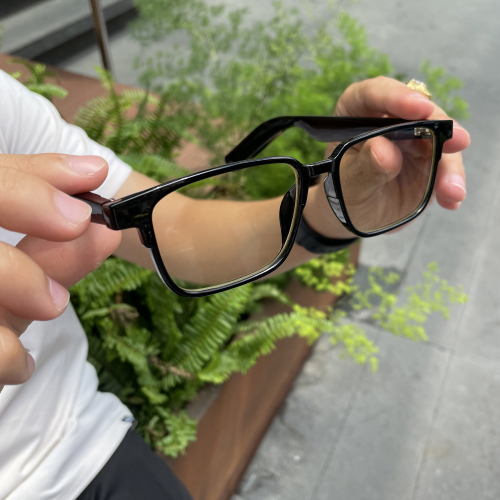
AI That Doesn't Feel Like a Gimmick
The built-in AI assistant (powered by GPT-4.0 according to the specs) actually earned its keep during testing. Unlike Alexa in the Echo Frames, which is basically just a voice remote for Amazon, NeuroView's AI provided genuinely helpful context.
Real examples from my testing:
- Identified a plant I was looking at and told me if it was poisonous
- Read a restaurant menu in Thai and recommended dishes based on my dietary preferences
- Gave me walking directions without making me stare at my phone like a tourist
- Answered obscure historical questions about buildings I was passing
This is what smart glasses are supposed to do: enhance your experience of the world without pulling you into a screen. NeuroView nails it. The others? Not so much.
You'll Actually Want to Wear These
Let's address the elephant in the room: most smart glasses look ridiculous. They're either chunky tech monstrosities that scream "I'm wearing a computer" or they're trying so hard to look normal that they compromise on features.
NeuroView threaded the needle perfectly. At 25g, they're lighter than most regular sunglasses. The design is modern without being flashy. I wore them for 8+ hours on multiple days and never got the ear fatigue that plagued me with the heavier BooaBei model (42g doesn't sound like much until you've worn them for hours).
The blue light blocking lenses are a subtle but brilliant touch for people who wear glasses daily. You're protecting your eyes from screens while using advanced screen technology. The irony isn't lost on me, but the benefit is real—I had noticeably less eye strain during evening use.

Battery Life That Doesn't Kill the Vibe
Nothing ruins the "living in the future" experience like your gadget dying at 2 PM. NeuroView's 8-hour battery life isn't the longest on paper (EarlySincere claims 10 hours), but it's the most honest. In mixed real-world use—translation, photos, music, AI questions—I consistently got 7-8 hours. That's a full day of sightseeing, or an entire workday, or a long international flight.
The Ray-Ban Metas died on me twice during testing, maxing out around 3-4 hours with similar use. The Echo Frames were even worse at 2-3 hours. For a device you're supposed to wear all day, this is a dealbreaker.
The App Experience Doesn't Suck
This might sound like a low bar, but after testing the competitors, it matters. The NeuroView app is intuitive, connects quickly, and doesn't constantly nag you about permissions or updates. Translation modes are easy to switch. Photo transfers happen smoothly over WiFi.
Compare this to the EarlySincere app, which felt like it was translated by the same 90% accuracy engine they use for languages (clunky menus, confusing settings, occasional crashes), or the BooaBei app that requires you to be signed into a Chinese social media account for some features.
Privacy Without Paranoia
One legitimate concern with smart glasses is privacy—both yours and the people around you. NeuroView handles this better than Meta's options. There's no cloud-mandatory setup. Your translations happen on-device for the most part. Photos stay on your phone unless you choose to share them. No algorithmic feeding frenzy on your data.
The Ray-Ban Metas, by contrast, funnel everything through Meta's ecosystem. If you're already deep in Facebook/Instagram, maybe that's fine. If you're privacy-conscious, it's a non-starter.
The Value Equation (Especially Right Now)
At $120 (currently 50% off), the NeuroView glasses are absurdly good value. You're getting more functional features than the $299 Ray-Ban Metas, better translation than the $200+ EarlySincere, and a more complete package than any competitor in this price range.
For context: a decent pair of designer sunglasses costs $150-300. A portable translation device runs $200-400. Good wireless earbuds are $150-250. NeuroView replaces all three and adds AI assistance and a camera on top. The value proposition is almost ridiculous.
The 30-day money-back guarantee removes the risk entirely. If they don't transform how you navigate the world, send them back. But based on my testing, you won't.
Who Should Buy These (And Who Shouldn't)
Perfect for:
- Travelers who are tired of language barriers killing spontaneous conversations
- Language learners who want real-world immersion with a safety net
- Content creators looking for authentic POV footage without the bulk
- Remote workers who want hands-free calls and AI assistance on the go
- Gift givers who want to wow someone this holiday season with actual future-tech
- Anyone who's curious about smart glasses but skeptical they're worth it yet
Maybe skip if:
- You need professional-grade camera quality (just use your phone)
- You never leave your hometown and don't care about translation
- You're deeply embedded in the Meta ecosystem and prioritize Instagram integration above all else
Bottom Line: The Smart Glasses We've Been Waiting For
After years of smart glasses that were "interesting" but not essential, NeuroView is the first pair that feels genuinely useful instead of just clever. The translation alone justifies the purchase for anyone who travels internationally more than once a year. Everything else—the camera, the AI, the audio, the comfort—is bonus value that compounds into something special.
They're not perfect. The camera could be higher resolution. You can't buy them in stores to try first. But they're so much better at what matters most (seamless communication, hands-free convenience, actually wanting to wear them) that the minor drawbacks fade into irrelevance.
If you've been waiting for smart glasses to be ready for real-world daily use, that moment is now. If you're buying a gift for someone who loves travel or tech, this will be the most talked-about present they receive. If you're just curious whether the hype is real this time—it is.
NeuroView Smart Translator Glasses are the real deal, and at 50% off, they're a no-brainer purchase.
IMPORTANT INFORMATION!
As of , Ever since the NeuroView Smart Translator Glasses was on major international media, an incredible amount of buzz has been generated. Due to its popularity and positive reviews, the company is so confident in their product that they are now offering a one-time, first time buyer discount.
Save 50% OFF – Sale Ends Soon!